
You hear a supercar before you see one. The sound rolls down the street, low and sharp. Heads turn before the car comes into view, and that moment explains half the appeal. A supercar is built to be noticed, and it rarely fails.
This guide answers what is a supercar in plain words. You will learn how fast these cars go and how they differ from sports cars. You will also learn what they cost to own and why stars love them. No jargon is needed, just clear facts.
What Is a Supercar?
A supercar is a street-legal sports car with race track power, speed and handling. It also has a rare style that sets it apart from a normal sports car. Think of huge power, sharp handling and low looks. The price keeps most buyers out, and that mix is the heart of the supercar definition.
Ask ten fans what is a supercar and you will get ten answers. Some point to power, some to price, and some to the badge on the nose. The truth is that no single rule decides it. A car earns the name through a mix of speed, skill and scarcity.
The word itself is loose on purpose. It covers factory cars built for the road, not race cars with plates. It also covers cars that cost far more than most homes earn in a year. That loose edge is why fans love to argue about it.
The Short Version
- A supercar is a street-legal sports car with extreme speed, sharp handling and rare style.
- Most make at least 600 horsepower. They hit 60 mph in under 3.5 seconds and top 200 mph.
- A sports car is fast and fun. A supercar is faster and rarer. A hypercar sits above both.
- The Lamborghini Miura of 1966 is often called the first supercar.
- New prices start in six figures, and running one can cost thousands of pounds a year.
How Fast Is a Supercar?
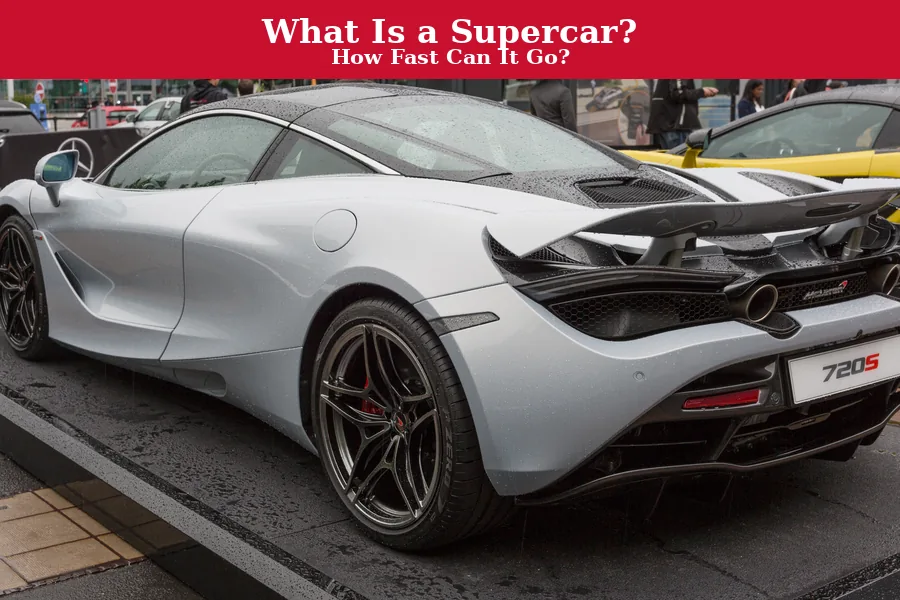
Most modern supercars make 600 horsepower or more. They reach 60 mph in under 3.5 seconds. Top speed sits above 200 mph for most of them. Those three numbers form the rough test for the class.
Power alone does not make a supercar, as the car must put that power down cleanly. Dual clutch gearboxes shift in a blink, and wide tyres grip the road hard. Carbon ceramic brakes stop the car again and again without fade. Active aero pushes the car down at speed, so it stays glued to the road.
Weight matters as much as power. A carbon fibre body keeps the car light and stiff, which helps it turn and stop. Engineers chase every kilo, from the seats to the wheels. The result is a car that feels alive in your hands, even at sane speeds.
- 0 to 60 mph: under 3.5 seconds, often near 3 seconds.
- Top speed: over 200 mph for most modern supercars.
- Power: at least 600 horsepower, and often far more.
- Brakes: carbon ceramic discs that cope with heat lap after lap.
Supercar vs Sports Car vs Hypercar
A sports car is built for fun and daily use. A supercar is built for extremes, with more power, rarer parts and a far higher price. A hypercar goes further still, with over 1,000 horsepower and a price in seven figures. The three sit on one ladder, and each step costs far more than the last.
The line between the two is soft, so what is a supercar in the end? A quick sports car can match a supercar on one test. Yet it lacks the rare build and the low production run. That mix of speed, craft and scarcity is what sets a supercar apart.
| Sports car | Supercar | Hypercar | |
|---|---|---|---|
| Horsepower | 300 to 500 | 550 to 900 | 1,000 or more |
| 0 to 60 mph | 4 to 6 seconds | 2.5 to 3.5 seconds | Under 2.5 seconds |
| Top speed | Around 150 mph | Over 200 mph | Over 250 mph |
| Price | Tens of thousands | Six figures | Seven figures |
| Production | Mass made | Limited runs | A few hundred |
Hypercars use hybrid power to pass 1,000 horsepower. The McLaren P1, Porsche 918 Spyder and LaFerrari led that change in 2013. New electric hypercars like the Rimac Nevera push the idea further still. Yet even a hypercar starts life as a supercar idea, pushed to the edge.
How Did the Supercar Begin?
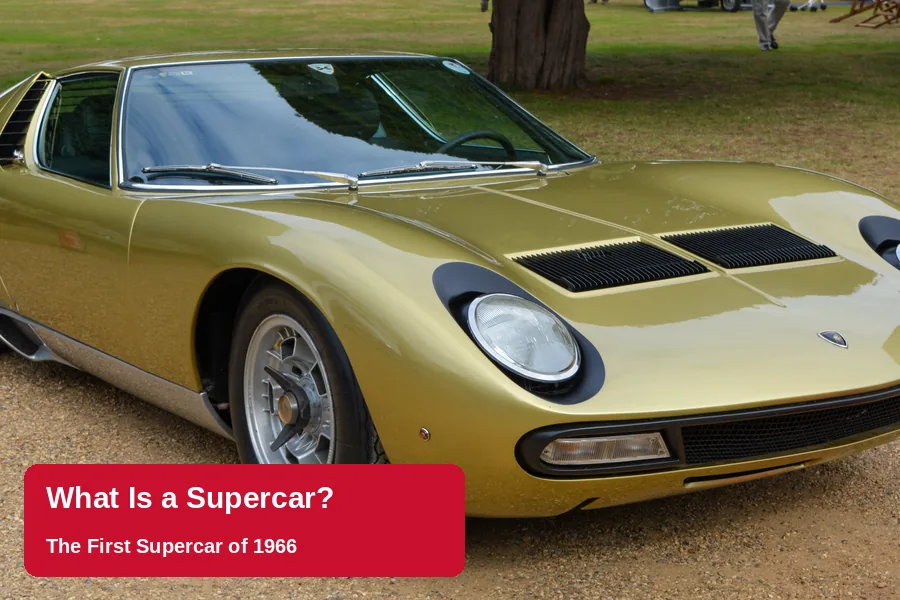
The Lamborghini Miura of 1966 is often called the first supercar. It put a big V12 engine behind the driver. Its low body looked like nothing else on the road. That mid engine shape set the pattern for decades, as Wikipedia’s supercar page shows.
By the 1970s and 1980s the word was in wide use. The 1990s gave it a rough test. A true supercar had a mid engine, two seats and eight cylinders or more.
It needed at least 400 brake horsepower and a top speed of 180 mph. Poster cars like the Ferrari F40 and the Lamborghini Countach filled bedroom walls. The McLaren F1 of the 1990s then broke the mould. It had a centre driving seat and a top speed record.
The 2000s brought tech that made supercars easier to drive. Dual clutch gearboxes, launch control and active suspension joined the list. Then hybrids changed the game again, and full electric hypercars followed. The idea stays the same, yet the tools keep moving on.
Why Do Celebrities Love Supercars?
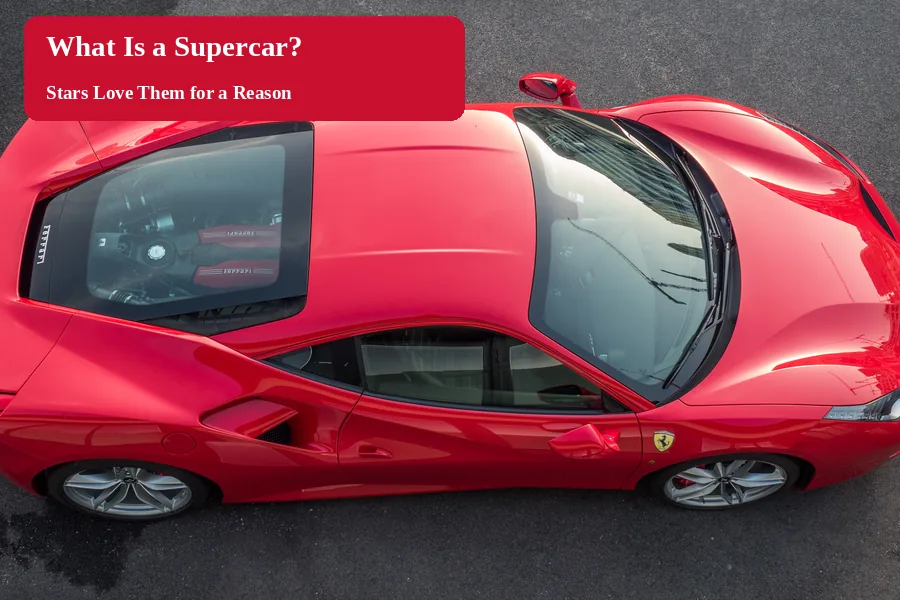
Stars love supercars because the cars match their public image. A supercar is loud, rare and hard to miss, just like fame itself. A-list celebrities are the stars most often pictured with supercars at premieres and on red carpets. The car becomes part of the entrance.
Film has tied stars to fast cars for decades. Tom Cruise built his name on high speed chases. Sylvester Stallone has owned a black Bugatti Veyron, a car with over 1,000 horsepower. These links turn a car into a story, and stories sell.
The link works both ways. A star in a supercar gets more photos. The car gets more fame, so makers lend cars for films and events. Fans then chase the same models, and prices for rare cars climb.
- Image: a supercar makes an entrance that a saloon never could.
- Rarity: limited runs mean few people own the same car.
- Sound: a big engine turns heads before the car is seen.
- Value: rare models can hold their price, and some gain value.
What Does a Supercar Cost to Own and Run?
A new supercar costs from about £150,000 to £300,000 for most models. Rare ones pass £1 million. Anyone who asks what is a supercar should also ask what it costs to keep one. The price tag is only the start: fuel, insurance and servicing add thousands each year.
Insurance is often the first shock. UK cover for a Ferrari or Lamborghini runs £4,000 to £8,000 a year. A major service can cost £2,000 to £5,000, and tyres wear fast. UK guides put yearly running costs at £8,000 to £20,000 for a used supercar.
Depreciation is the biggest bill of all. A car bought new can lose tens of thousands of pounds in its first years. Some rare models hold their value, yet most do not. A rough rule sets yearly costs at about 10% of the car’s value.
- Insurance: £4,000 to £8,000 a year.
- Servicing: £3,000 to £6,000 a year at a dealer or specialist.
- Fuel and tyres: thousands more, based on miles driven.
- Depreciation: often the largest cost, tens of thousands a year on a new car.
Can You Drive a Supercar Every Day?
Yes, you can, but most owners do not. A supercar works best as a second car for fine days and short trips. Daily use brings low ground clearance, firm seats and small boots. Traffic jams and speed bumps turn the dream into hard work.
Some models cope better than others. The Audi R8 and the Nissan GT-R are known as everyday supercars. They give more comfort and room, and they still turn heads. They start first time and cope with rain.
Daily life in a supercar is the opposite of slow living. Every trip needs a plan, from parking to fuel stops. Owners who love the routine accept the trade, and the rest keep a normal car too. For most fans, a supercar stays a weekend thrill, not a daily tool.
Supercar Questions, Answered
How much does a supercar cost?
Most new supercars cost from about £150,000 to £300,000. Rare models pass £1 million with ease. A used one costs far less to buy, yet the yearly bills stay high. The true price is the buy price plus the yearly bills.
What is the fastest supercar?
No single answer exists, since makers test speed in different ways. Most modern supercars top 200 mph, and the quickest pass 210 mph with ease. Hypercars go further, with some aimed at 250 mph or more. On the road, the 0 to 60 mph time matters more.
Is a supercar the same as a hypercar?
No, a hypercar sits one step above a supercar. Hypercars make over 1,000 horsepower, often with hybrid power, and cost seven figures. They are built in runs of a few hundred cars. Every hypercar is a supercar, yet few supercars reach hypercar level.
What is the cheapest supercar?
The cheapest way in is a used supercar, not a new one. Older models like the Audi R8 cost far less than a new Ferrari. Prices still start in five figures, and the running bills stay high. A low buy price still brings high yearly bills.
Can a supercar be an electric car?
Yes, and the fastest new supercars use electric power. Hybrid hypercars like the McLaren P1 led the change in 2013. Full electric models like the Rimac Nevera and the Pininfarina Battista followed. Electric motors give instant pull, which suits a supercar well.
Keep Your Eyes Open on Your Next Drive
You now know what is a supercar, where it came from, and what it costs. The next step is simple: watch for one on your next drive. Note the low shape, the wide stance and the sound. You will spot them far more often once you know what to look for.
If a supercar stays a dream, that is fine too. Dreams cost nothing, and the facts cost nothing either. Share this guide with a friend who loves fast cars. Then tell us which supercar you would pick, if the keys were yours.