
How many players are on a football team? Eleven play for each side. One stands in goal, and ten play out on the field. Two teams share the pitch, so 22 players start the match.
But the count does not stop at eleven, and most fans mix up three numbers. The pitch count, the bench count and the squad count all differ. This guide untangles all three, in plain words.
How Many Players Are on a Football Team?
A football team fields 11 players at a time, no more. One is the goalkeeper, and ten are outfield players on the grass. That count holds from Sunday league games to the World Cup final. No side may field more than eleven at once.
Law 3 of the IFAB Laws of the Game sets the cap at eleven. Both teams put 22 players on the pitch at kick-off. Subs wait on the bench, ready to come on.
The count stays the same at each level of the game. Youth sides, Sunday league sides and pros all field eleven. Small sided games use fewer players, and we cover them below.
At a Glance
- 11 players on the pitch per team
- 1 goalkeeper plus 10 outfield players
- 22 players start the match in total
- 7 players is the lowest count allowed
- 5 subs per match in top games
- 26 players in a World Cup squad
One Goalkeeper and Ten Outfield Players
The goalkeeper is the only player who may use hands, and only inside the box. Every other player uses feet, head and chest to move the ball. That split shapes how each of the eleven plays.
Defenders guard the goal and win the ball back. Midfielders link defence and attack, and they cover the most ground. Forwards chase goals, and they press high up the pitch. Each role needs a distinct set of skills.

Formations show how the ten outfield players line up. A 4-4-2 packs four defenders, four midfielders and two forwards. A 4-3-3 pushes one more player into attack. Three goals in one game earn a forward a hat trick.
The Seven Player Rule: When a Side Runs Short
A match may not start with fewer than seven players on a side. It may not carry on if a side drops below seven, through cards or knocks. The referee must stop the game at that point.
Red cards cut the count fast, and each one leaves a gap on the pitch. A side down to ten must reshape its lines and work harder. A side down to nine faces a steep climb to hold on. Injuries can thin the count too, once the subs run out.
If a keeper is sent off and no subs stay, an outfield player takes the gloves. That swap shows why squads name two or three keepers. Seven stays the floor, whatever the cause.
Five Substitutions and the Matchday Squad
Top games now allow five subs per side in each match. Coaches may use them in three breaks, plus the half time break. That limit keeps the game flowing, with fewer long stops.
A sub who comes on may not come back in top games. That rule makes each change count, so coaches hold one back for late knocks. Fresh legs can change a game in the last ten minutes. A tired side with no subs left must simply hold on.
In the Premier League, each side names nine subs on the bench. That gives a matchday squad of 20 players, eleven starters plus nine subs. The bench holds cover for each line of the team.
Squad Sizes: Club and Country
A matchday squad is not the whole club squad, and the gap can surprise fans. Clubs keep a wider pool of players, and they pick from it each week. Two well known limits show how wide that pool runs.
Premier League clubs name a 25 man senior squad for the season. That list caps at 17 players who are not home-grown. Players aged 21 or under need no place on the list. The rule keeps room for local talent in each squad.
At the World Cup, each nation takes 26 players to the finals. Three of them must be goalkeepers, so cover stays in place. Only 11 of the 26 start each game, and the rest wait on the bench.
Smaller Games: 5-a-Side, 7-a-Side and 9-a-Side
Not every game needs eleven a side, and small games grow the sport. Young players learn best with more touches and less space. The FA scales the game to age, so each child plays more.
England sets clear steps on the path to the full game. Each step adds players as children grow, and the pitch grows too. The list below shows the FA path for young players.
- Under 8s and under 9s play 5-a-side
- Under 10s and under 11s play 7-a-side
- Under 12s and under 13s play 9-a-side
- Under 14s and older play the full 11-a-side

Five-a-side also thrives as a casual game for adults. Four outfield players join one keeper on a small court. Short games and quick goals keep the pace high.
American Football Plays 11 Too
The same count turns up in a quite distinct code. American football also fields 11 players per side on each play. That shared number causes much of the mix up in search results.
Each NFL side keeps 53 players on its active roster. Only 48 of them may dress for a game, if eight linemen are active. A further 16 players train on the practice squad. That gives about 69 players tied to one team each week.
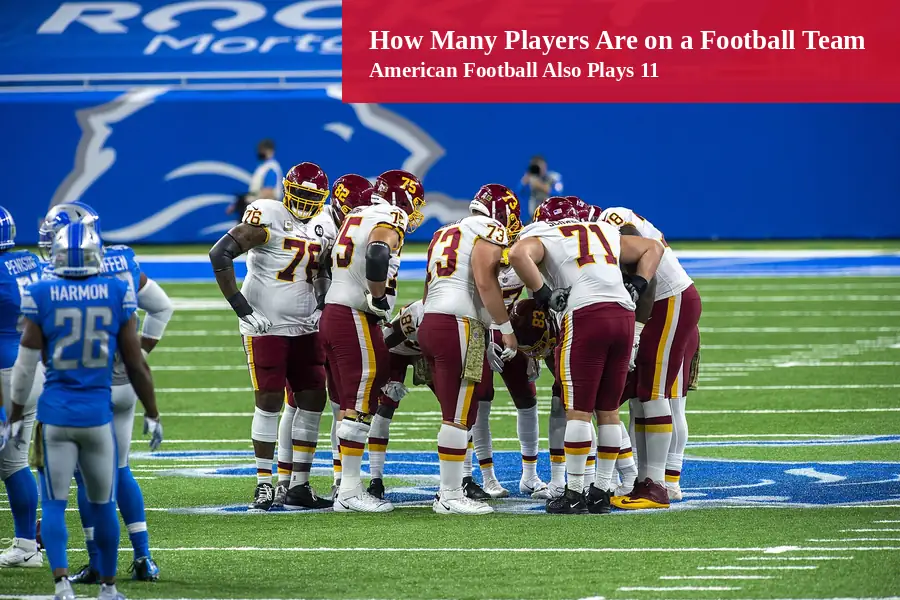
College sides run larger, with rosters near 105 players. High school sides vary, from about 25 to 80 players. The on field count stays 11 at each level, from school to the pros.
| Code | On the field | Full squad | Subs used |
|---|---|---|---|
| Soccer, Premier League | 11 | 25 | 5 |
| Soccer, World Cup | 11 | 26 | 5 |
| American football, NFL | 11 | 53 plus 16 practice | Unlimited between plays |
Reading a Teamsheet Like a Fan
Fans ask how many players are on a football team when they first read a teamsheet. A teamsheet lists the starting eleven first, then the bench. Squad numbers help you spot each player at a glance. The keeper wears 1 in most sides, though stars now bend that rule.
Count the shirts before kick-off, and you will see eleven. Watch the bench too, and you will spot the game changers. A late sub can turn a draw into a win. That is why the numbers past eleven still count.
Next time you watch, test your eye on the count. Spot the keeper, then count the ten outfield shirts. You will never watch a match the same way twice.
Count the Shirts, Then Watch the Game
Eleven players take the pitch, one in goal and ten out on the field. Seven is the floor, five subs may come on, and squads run to 25 or 26. American football shares the on field count, with a far larger roster behind it.
Now you hold the numbers that shape every match. Browse our Sports archive for more football stories. Footballers who reach the top can join the A-list of fame. Tell us in the comments which number surprised you most.
Frequently Asked Questions
How many players are on a football team?
Eleven players take the pitch for each side. One is the goalkeeper, and ten are outfield players. Both teams put 22 players on the field at kick-off. More players wait on the bench as subs.
How many players are on a football team in total, with subs?
A Premier League matchday squad holds 20 players, with nine subs on the bench. Each World Cup squad holds 26 players, with three keepers in the group. A club senior squad may hold 25 players, plus young players aged 21 or under.
What is the lowest number of players a team can field?
Seven players is the lowest count allowed in a match. A match may not start below seven players. It must stop if a side drops below seven. Red cards and knocks can thin the count, but seven stays the floor.
How many subs can a football team use?
Top games allow five subs per side in each match. Coaches may use them in three breaks, plus half time. Once a player leaves the pitch, that player stays off.
How many players are on an American football team?
Eleven players take the field per side on each play. An NFL side keeps 53 players on its active roster. Only 48 may dress for a game, with 16 more on the practice squad.
How many players are in a 5-a-side football team?
Five players take the court per side, with one keeper and four outfield players. Young players in England play 5-a-side at under 8 and under 9. The small game gives each child more touches on the ball.