
Your phone buzzes before your feet touch the floor. Your calendar fills itself the moment a slot clears, like an A-list celebrity diary. If that sounds familiar, you may be ready for a slower way to live.
This guide answers what is slow living in plain words. You will learn where the idea came from, and what it asks of you. You will also get seven small steps to try this week. No big life change is needed first.
What Is Slow Living?
Slow living is a way of life that puts intention ahead of speed. You choose fewer things, give them your full attention, and let the rest go. It is not about doing everything slowly. It is about doing what matters at the right pace, with time left to rest.
People ask what is slow living and picture a holiday. It is not a holiday. It is a daily choice about how you spend your hours. A slow morning with one cup of tea can count.
Three marks set slow living apart from a quiet weekend. You choose on purpose, not by drift. You give one thing your full attention. You judge a day by how it felt, not by how much you crossed off.
- Intention over autopilot: you pick what fills your day.
- Presence over speed: you stay with one thing at a time.
- Quality over quantity: fewer plans, done with care.
At a Glance
- Slow living means choosing fewer things and giving them your full attention.
- It started with the Slow Food movement in Italy in 1986.
- Its five principles are intention, presence, quality, connection and enough.
- It can cut stress, and it costs nothing to start.
- Begin this week with seven small steps, one per day.
Where Did Slow Living Come From?
Slow living grew from the Slow Food movement, started by Carlo Petrini in Italy in 1986. He protested a McDonald’s opening near the Spanish Steps in Rome. His point was simple: fast food strips the pleasure and company out of eating. The protest struck a nerve.
Over the next decades the idea reached other parts of life. Slow Cities and slow travel followed. Slow fashion and slow parenting followed too.
In 2004 Carl Honore gave the movement its best known book. In Praise of Slowness argued that speed had turned into a habit, not a choice. His book carried the idea from food lovers to busy workers and parents. Wikipedia’s slow living page traces the same path.
The movement even has its own short code. SLOW stands for sustainable, local, organic and whole. Buy close to home, pick things that last, and take only what you need.
The Core Principles of Slow Living
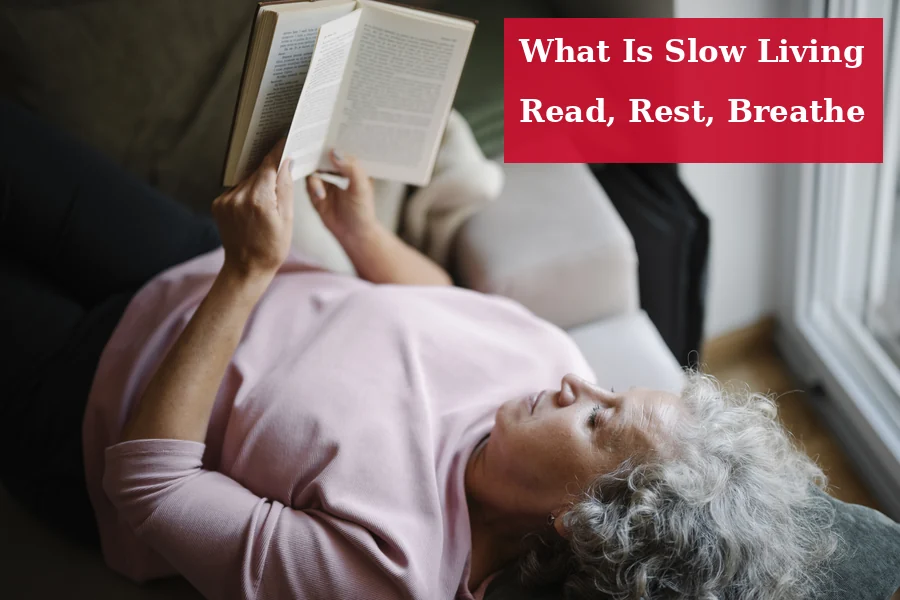
Five ideas sit at the heart of slow living. They are intention, presence, quality over quantity, connection and enough. Learn them once, and the rest falls into place.
- Intention: you choose how your time goes, instead of letting habit choose for you.
- Presence: you give one task your full attention. Eat without scrolling. Talk without glancing at your phone. Walk without a podcast in your ears.
- Quality over quantity: you do fewer things, but you do them well. One real talk beats five rushed check-ins.
- Connection: you make room for people and place: long meals, local shops and time outdoors.
- Enough: you stop at the point where more adds nothing. A full shelf, a full diary and a full inbox all show that enough has passed.
These ideas work as a set, not as a menu. Intention without presence is just a plan. Together they show what is slow living in practice.
Buy fewer, better things is the principle most people meet first. A piece of gold vermeil jewellery you keep for years fits the idea well. It costs more once, yet it asks less of you over time.
Slow Living vs Fast Living
A fast life runs on speed and volume. A slow life runs on care and choice. The table below puts the two side by side.
| Fast living | Slow living | |
|---|---|---|
| Pace | Rush from task to task | One thing at a time |
| Measure of a day | How much got done | How the day felt |
| Food | Fast, often alone | Cooked and shared |
| Phone | Always on, always checked | Set hours only |
| Shopping | More, cheaper, faster | Fewer, better, lasting |
| Rest | Earned after burnout | Built in daily |
| People | Quick check-ins | Long, unhurried talks |
Most people live between the two, and that is normal. Few days are purely fast or purely slow. The aim of slow living is not a perfect slow day. It is to build in enough slow space that fast days stop running you.
A fast life treats busyness as proof of worth. A slow life treats attention as the real currency. That shift changes what you say yes to. It changes what you buy, and who gets your best hours.
The Benefits of a Slower Life
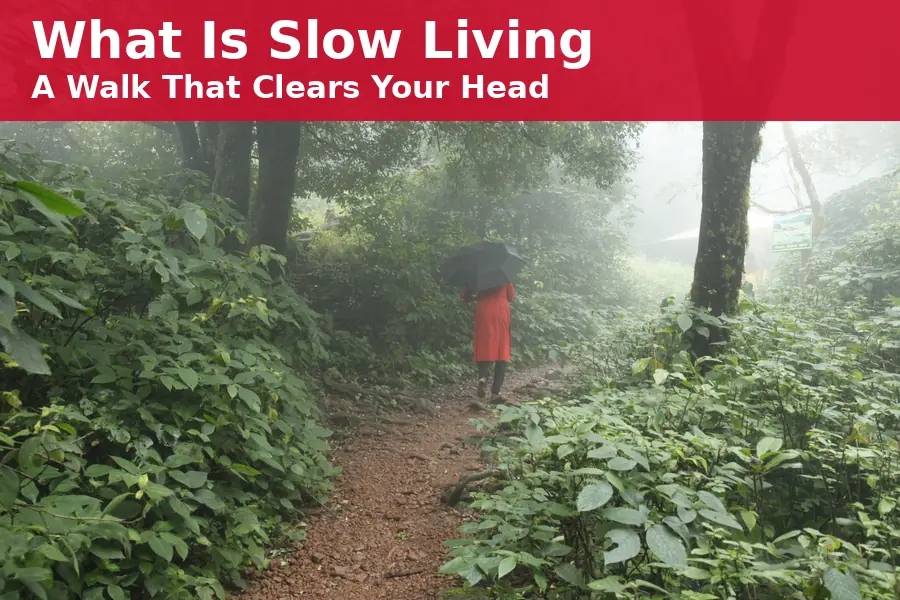
A slower life can cut stress and improve sleep. It leaves more room for the people you love. Studies now back those gains with numbers.
The strongest evidence comes from work. A 2025 study in Nature Human Behaviour followed 2,896 employees across 141 organisations in six countries. Staff who worked fewer hours reported less burnout and better sleep, with no drop in performance.
The gains reach past work into daily life. Slow evenings help you sleep, since a calm mind rests faster. Slow meals help you taste food and stop when full.
- Less stress, since rest gets a slot in the day.
- Better sleep, since screens stop late at night.
- Closer ties, since unhurried talks build trust.
- More money kept, since fewer impulse buys slip through.
- A lighter footprint, since less stuff means less waste.
Slow living also suits the planet. Buying less but buying better cuts waste at the source. Walking to a local shop cuts car trips.
How to Start Slow Living in 7 Steps
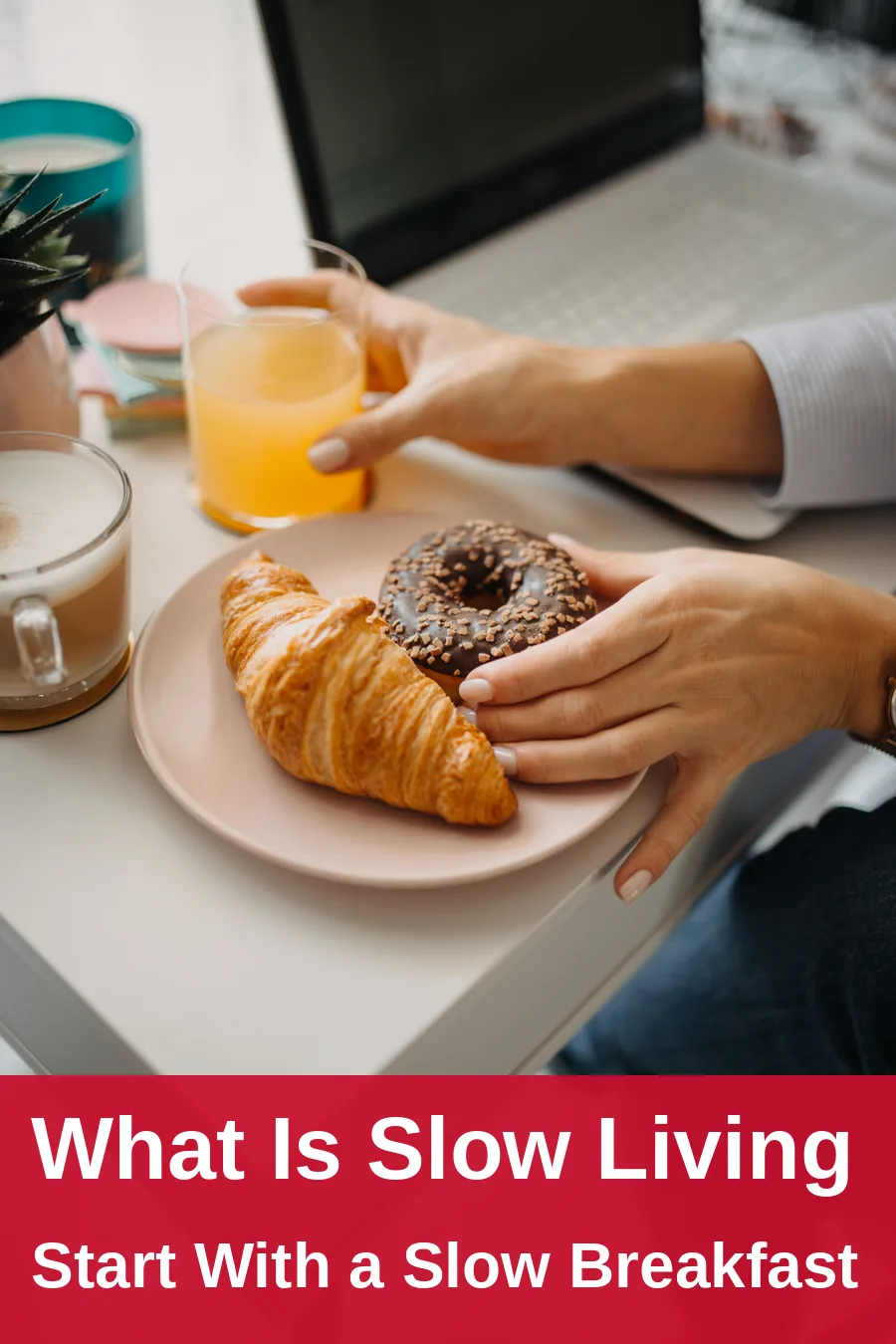
You need one small change per day for a week. Each step below takes under an hour. Most take far less than that.
- Day 1: Guard your first 20 minutes. Do not check messages when you wake. Make tea and let the day start with you.
- Day 2: Build a slow morning ritual. Give the morning one calm act. A proper breakfast works, or a blowout hairstyle on a quiet Sunday.
- Day 3: Eat one meal without a screen. Put the phone in another room. Taste the food, and notice when you feel full.
- Day 4: Try a short digital detox. Pick one app you open by habit. Take it off your home screen for a week.
- Day 5: Clear one small space. Pick a shelf or a drawer, not a whole room. Keep what you use.
- Day 6: Add buffer time to your day. Leave 15 minutes between meetings and tasks. Gaps stop one delay from wrecking the whole day.
- Day 7: Protect one slow hour. Spend it on a walk, a book or a long talk.
After the week, keep the steps that felt good and drop the rest. One slow zone beats a full overhaul. A slow life built this way lasts.
Slow Living Myths That Hold People Back
Slow living is not laziness. It asks for more care, not less effort. A slow worker still works hard, yet the work gets full focus. The difference sits in the pace, not in the will.
You do not need to quit your job or leave the city to live slowly. The practice fits a flat and a busy week. It asks you to pick which parts of your day earn your rush.
The slow look on social media can mislead people. Linen dresses and sourdough starters fill the feeds, but none of them is the point. The core habits cost nothing.
One honest limit deserves a plain word. Slow living is harder for shift workers and carers. Time is not equal for all, and a tight week leaves less room to choose. Start smaller, with one guarded hour.
Slow Living in the UK
What is slow living in Britain? It fits British life well. The UK even ran the largest four day week trial in the world. Sixty-one companies and about 2,900 workers took part.
The trial ran from June to December 2022, with shorter hours and no pay cut. The Autonomy report of February 2023 found lower burnout for 71% of staff. It found less stress for 39% of them. When the trial ended, 56 of the 61 firms kept the shorter week.
Eighteen made it permanent. Most UK towns have a park, a market and a high street within a short walk. Tea breaks, Sunday roasts and a walk after lunch are old British habits with slow roots. A slow living UK routine can start with one guarded tea break a day.
Slow Living Questions, Answered
What is slow living, and how is it different from simple living?
Simple living cuts what you own and owe, so your material life gets lighter. Slow living cuts the pace and adds presence. The two often overlap, yet they are not the same.
How do I start slow living with a busy job and kids?
Start with one slow zone, not a whole new life. Guard your first 20 minutes, or eat one meal without a screen. Small wins build trust. Add a second habit only when the first feels easy.
Is slow living realistic, or is it just for rich people?
The core habits cost nothing, so the practice is open to most people. Fewer plans, more attention and phone free meals need no money at all. The costly version online is an aesthetic, not the idea.
Does slow living mean I have to give up technology?
No, it means you use technology on purpose instead of by habit. Keep the phone, yet set hours for it. Keep meals free of screens. Delete one app you open without thinking.
Can slow living help with stress and burnout?
Yes, a slower pace can cut stress and help you sleep better. A 2025 study of 2,896 workers found less burnout and better sleep. Rest built into the day beats rest saved for a crash.
Your First Slow Hour Starts Today
You now know the answer to what is slow living, and where it came from. You also know the five principles and the myths. Pick one hour today and guard it.
Try a walk with no podcast. Try a meal with no screen. Notice how the hour feels when nothing rushes it. A slower life starts with one hour, kept on purpose.