




Joshua Clottey is a retired Ghanaian professional boxer born on October 6, 1977, in Accra, Ghana. He is the son of the late Francis Attuquaye Clottey, the legendary boxing trainer who founded the Akotoku Boxing Academy and discovered Azumah Nelson. Joshua held the IBF welterweight title from 2008 to 2009 and finished his career with a record of 41 wins and 5 losses.
Table Of Content
- Early Life and Family Background
- Education and Academic Journey
- Physical Appearance and Personality
- Parents
- Father: Francis Attuquaye Clottey
- Mother: Madam Memuna Ansah
- Siblings and Extended Family
- Career and Professional Life
- Personal Life and Privacy
- Media Presence and Public Perception
- Net Worth and Lifestyle
- Future Prospects
- Legacy and Influence of Family
- Conclusion
- Frequently Asked Questions
- Who is Joshua Clottey?
- Who is Joshua Clottey’s father?
- Was Joshua Clottey ever knocked out?
- Who did Joshua Clottey fight in his biggest bouts?
- Does Joshua Clottey have brothers who also boxed?
- Where does Joshua Clottey live?
- What is Joshua Clottey’s estimated net worth?
- What is Joshua Clottey doing after retirement?
Some boxing stories begin in gyms filled with strangers. Joshua Clottey’s story began at home. He grew up in Accra, Ghana, training under his father, Attuquaye Clottey, who guided his sons in the fundamentals of boxing at local facilities in the Bukom district, a renowned hub for Ghanaian boxing talent. That foundation shaped everything that followed.
Joshua went on to become an IBF world welterweight champion, a man who shared rings with Manny Pacquiao, Miguel Cotto, and Zab Judah — and never once hit the canvas for keeps. His story is one of discipline, family legacy, and a quiet toughness that Ghana still celebrates today.
| Attribute | Details |
|---|---|
| Full Name | Joshua Clottey |
| Date of Birth | October 6, 1977 |
| Age | 48 years old (as of 2026) |
| Place of Birth | Accra, Ghana |
| Nationality | Ghanaian-American |
| Profession | Retired Professional Boxer |
| Famous For | IBF Welterweight Champion (2008–2009); son of legendary trainer Attuquaye Clottey |
| Father | Francis Attuquaye Clottey (late) |
| Mother | Madam Memuna Ansah |
| Siblings | Emmanuel Clottey, Judas Clottey (both professional boxers) |
| Marital Status | Married |
| Known Traits | Calm demeanor, exceptional durability, strong defensive style |
| Social Media Presence | Limited and private |
Early Life and Family Background
Joshua Clottey came into the world on October 6, 1977, in Accra, the capital city of Ghana. His early years were marked by a love for football, a sport he shared with his father. The streets of Bukom — a coastal neighborhood in Accra long famous for producing world-class fighters — shaped his early view of the world. This was a community where boxing was not just a sport but a way of life.
As a child in his native Ghana, Clottey had a passion for football, a sport that was also played by his father. He moved and spent a few years in the United Kingdom then later to the United States. His journey across continents speaks to the drive he carried from Accra — a hunger to compete at the highest level and to honor the name he was born into.
Growing up in a household where boxing was taught and discussed daily gave Joshua an advantage most fighters never have. His father was not simply a coach from the neighborhood. He was one of the most respected boxing minds in all of Ghana, a man whose influence reached well beyond his own family.
Education and Academic Journey
Detailed records of Joshua Clottey’s formal academic background are not widely documented in public sources. Clottey revealed that boxing is a very difficult sport but he chose it and became a superstar after dropping out of school. His own words confirm that he made a clear and early choice — boxing over the classroom.
That choice, while not uncommon among professional athletes from low-income communities, was not made out of indifference to education. Years later, Clottey would speak with pride about his daughter’s academic achievements, showing that he deeply values learning for the next generation even if his own path went a different direction.
Physical Appearance and Personality
Joshua Clottey stands at 5 feet 8 inches tall with a 70-inch reach, fighting in an orthodox stance. A tough, orthodox fighter, Clottey has a balanced combination of size, speed, stamina, power, endurance, ring savvy, and a solid chin. His defensive skills are top notch; he stands upright while holding his arms and gloves high to protect himself.
Outside the ring, those who have spoken with him describe Joshua as measured, respectful, and grounded. He carries himself without flash. He is the kind of person who speaks with conviction but without aggression. Clottey has offered advice to young boxers and sportsmen, urging them to stay disciplined, explaining that staying focused is integral to achieving success in boxing. His personality reflects the values of the household he grew up in — hard work, respect, and self-restraint.
Parents
Father: Francis Attuquaye Clottey
Joshua’s father was far more than a parent. The Akotoku Boxing Academy was founded in 1974 by the late Francis Attuquaye Clottey. The gym produced legends like Azumah Nelson, Ike Quartey, David “Poison” Kotey, Hector Clottey, Judas Clottey, and the late Alfred Kotey.
Francis Attuquaye Clottey was a famed boxer in Ghana who served as coach for the Black Bombers, the national amateur boxing squad, before he became a champion trainer upon retirement. His impact on Ghanaian boxing history is undeniable. Azumah Nelson called Attuquaye Clottey “one of the greatest boxing coaches Ghana has ever produced,” noting that it was Clottey who taught Azumah the importance of balance, when and how to apply power, and defense.
Attuquaye trained his sons Joshua Clottey, Judas Clottey, and Emmanuel Clottey, who all became professional boxers and made Ghana proud at some point in their careers. Joshua was the most decorated of the three, but the fact that all three sons turned professional speaks to the quality of training their father provided at home.
The elder Clottey’s legacy is woven into the fabric of Ghanaian boxing. His Akotoku Academy in Bukom remains a place where young fighters from the neighborhood go to develop their craft, carrying forward a tradition he built from scratch in 1974. Joshua grew up watching his father shape champions, and then became one himself.
Mother: Madam Memuna Ansah
Joshua Clottey was born to father Ali Attuquaye Clottey and mother Madam Memuna Ansah. He grew up in a sports-loving family where his father and uncle both were professional boxers.
Public records about Madam Memuna Ansah are limited, as she has lived a private life away from the spotlight. What is known is that she raised three sons who all pursued the demanding path of professional boxing — a commitment that speaks to the strength and support she offered as a mother. Raising children in Bukom, one of Accra’s most competitive boxing neighborhoods, required real resilience, and her family’s story reflects that spirit.
Siblings and Extended Family
Joshua grew up alongside two brothers who also chose boxing as their profession. He took up boxing with his two brothers, Emmanuel and Judas, who also became professional boxers.
Emmanuel Clottey, born on April 17, 1974, is a Ghanaian former professional boxer who competed from 1995 to 2016. He competed at the 1994 Commonwealth Games and is the brother of fringe contender Judas Clottey and former world champion Joshua Clottey.
The Clottey family name became associated with toughness and technical skill across multiple generations. Their father trained them, their community shaped them, and they each went on to represent Ghana in the professional ranks. The family has had its tensions over the years — there have been reports of disputes between Joshua and Emmanuel — but the shared history of boxing binds them in a way that few family experiences can.
Career and Professional Life
Joshua Clottey turned professional in 1995 at just 17 years old. He went undefeated in his first 24 fights, capturing regional titles including the IBF intercontinental welterweight title. His rise through the ranks was methodical and disciplined, reflecting the training he had received since childhood.
He beat Zab Judah on August 2, 2008, for the IBF welterweight title vacated by Antonio Margarito. That victory put him in the company of Ghana’s boxing elite — a world champion in the truest sense.
On June 13, 2009, Clottey faced Miguel Cotto in New York City at Madison Square Garden for the WBO welterweight title. Cotto’s combinations throughout the fight gave Cotto problems, but Cotto emerged the winner with a controversial split decision. Many ringside observers felt Joshua had done enough to win.
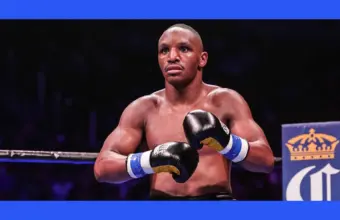
Clottey fought seven-division world champion Manny Pacquiao on March 13, 2010, in Arlington, Texas, at the Dallas Cowboys Stadium. Pacquiao threw a total of 1,231 punches in the fight, landing 246. Clottey threw a total of 399 punches, landing 108. The result was a unanimous decision loss, but Joshua survived all 12 rounds — a testament to the granite chin he inherited from his Bukom upbringing.
One of the most striking facts about Joshua’s career is that across 46 professional fights — including five losses against elite opposition — he was never stopped in any of his losses, never losing a bout via knockout. That record of durability is rare at any level of boxing. At the world championship level, it is exceptional.
His last recorded fight was in 2019, where he secured a victory over Tanzanian boxer Azziz Mponda by TKO in the 8th round. He retired with 41 wins, 5 losses, and 24 knockouts — a professional record that any boxer from any country would be proud to carry.
Personal Life and Privacy
Clottey is married and has children, though he prefers to keep his family life private. He resides in The Bronx, New York, where he has been involved in community activities and occasionally participates in charity events.
He has spoken publicly and with evident pride about at least one of his children pursuing higher education. There is a reference to Joshua bragging that his daughter is in law school — a moment that shows the side of him that exists entirely away from boxing. The man who spent decades absorbing punishment in front of thousands wants his children in courtrooms, not rings.
Joshua once stepped away from boxing altogether to care for a sick family member, choosing family over career at a moment when his professional momentum was building. That decision says a great deal about the kind of man he is.
Media Presence and Public Perception
Joshua Clottey has never been a fighter who sought the camera. He gives interviews when asked and speaks with candor, but he does not chase attention. Since retiring, Clottey has maintained a low profile, focusing on personal endeavors and family life. He occasionally engages with the media, sharing insights from his boxing career and life after retirement.
In Ghana, he is regarded with genuine affection. He noted that at some point, he felt like the last man standing as he was classed alongside Floyd Mayweather, Manny Pacquiao, Margarito, Zab Judah, and Miguel Cotto. That comment captures how seriously Ghana’s boxing community viewed his place in the welterweight division during his peak years.
His social media presence is minimal. He does not seek viral moments or public feuds. His legacy is built on fights, not posts.
Net Worth and Lifestyle
Joshua Clottey’s estimated net worth is $10 million, primarily accumulated through his successful boxing career, including earnings from major fights and endorsements. His highest-profile bouts — against Pacquiao at Cowboys Stadium, against Cotto at Madison Square Garden — were among the best-attended and most commercially visible events of their era in welterweight boxing.
He lives in the Bronx, New York, a city he moved to during his professional years to access better training infrastructure and stronger competition. His commitment to his family and community reflects the values instilled in him during his upbringing in Ghana. He has not chased celebrity retirement or public grandstanding. He has simply lived, quietly and purposefully, in the city that helped make him a world champion.
Future Prospects
Clottey continues to mentor young boxers, and there are mentions of potential appearances in charity matches or promotional events. Whether or not he steps back into the ring in any capacity, his experience — both as a fighter and as the son of one of Ghana’s greatest coaches — makes him an invaluable figure for any young boxer willing to listen.
His daughter’s pursuit of a law degree suggests a family culture that prizes education and professional achievement. Joshua’s future likely involves more coaching, more mentorship, and more time with a family that has always been at the center of his life.
Legacy and Influence of Family
The Clottey name carries real weight in Ghanaian boxing history. The late Attuquaye Clottey is credited with nurturing the careers of several Ghanaian world boxing champions, including David Kotei Poison, Azumah Nelson, Alfred Kotey, and Nana Yaw Konadu. That list alone would make any trainer’s career extraordinary. Azumah Nelson is widely regarded as the greatest African boxer of all time. Alfred Kotey was a world champion. David Kotei was Ghana’s first world boxing champion.
Joshua’s father built all of that — and then built his own sons into professionals as well. Joshua was the most successful member of the Clottey family of boxers as a former IBF welterweight champion.
As a Ghanaian boxer, Clottey served as an inspiration to aspiring fighters in his home country. He contributed to the competitiveness of the welterweight division and left a lasting mark on the sport. His technical style, built around defense, durability, and patience, reflects the teaching of his father — the man who trained Azumah Nelson to be the best Africa ever produced.
Conclusion
Joshua Clottey’s story is inseparable from his father’s. He grew up in the shadow of one of Ghana’s most important sporting figures — not as a burden, but as a foundation. He took the lessons of Bukom, the Akotoku Academy, and his father’s lifetime of coaching, and carried them into rings across the world.
He challenged three of the best welterweights of his era, won a world title, and never once lost consciousness in a professional fight. He stepped away from boxing to care for loved ones, raised children he speaks about with visible pride, and returned to give back to the sport that gave him everything.
The Clottey name will endure in Ghanaian boxing history. Francis Attuquaye Clottey built that legacy first, and Joshua honored it with every fight he ever took.
Frequently Asked Questions
Who is Joshua Clottey?
Joshua Clottey is a retired Ghanaian professional boxer born on October 6, 1977, in Accra, Ghana. He held the IBF welterweight title from 2008 to 2009 and finished his career with 41 wins and 5 losses.
Who is Joshua Clottey’s father?
His father is the late Francis Attuquaye Clottey, a legendary Ghanaian boxing trainer who founded the Akotoku Boxing Academy in 1974 and is credited with discovering and developing Azumah Nelson, among other world champions.
Was Joshua Clottey ever knocked out?
No. Across all five of his professional losses, Joshua Clottey was never stopped by knockout — a remarkable record that reflects both his physical durability and his defensive skills.
Who did Joshua Clottey fight in his biggest bouts?
His most high-profile fights were against Manny Pacquiao, Miguel Cotto, and Zab Judah. He defeated Judah to win the IBF welterweight title in 2008.
Does Joshua Clottey have brothers who also boxed?
Yes. His brothers Emmanuel Clottey and Judas Clottey both had professional boxing careers. All three brothers were trained by their father.
Where does Joshua Clottey live?
He currently resides in the Bronx, New York, where he moved during his professional career to access better training and competition.
What is Joshua Clottey’s estimated net worth?
His estimated net worth is approximately $10 million, built largely through earnings from his professional boxing career including major pay-per-view bouts.
What is Joshua Clottey doing after retirement?
He maintains a quiet private life in the Bronx, mentors young boxers, and participates in occasional community and charity events. He is also a father whose daughter is pursuing a career in law.








No Comment! Be the first one.