





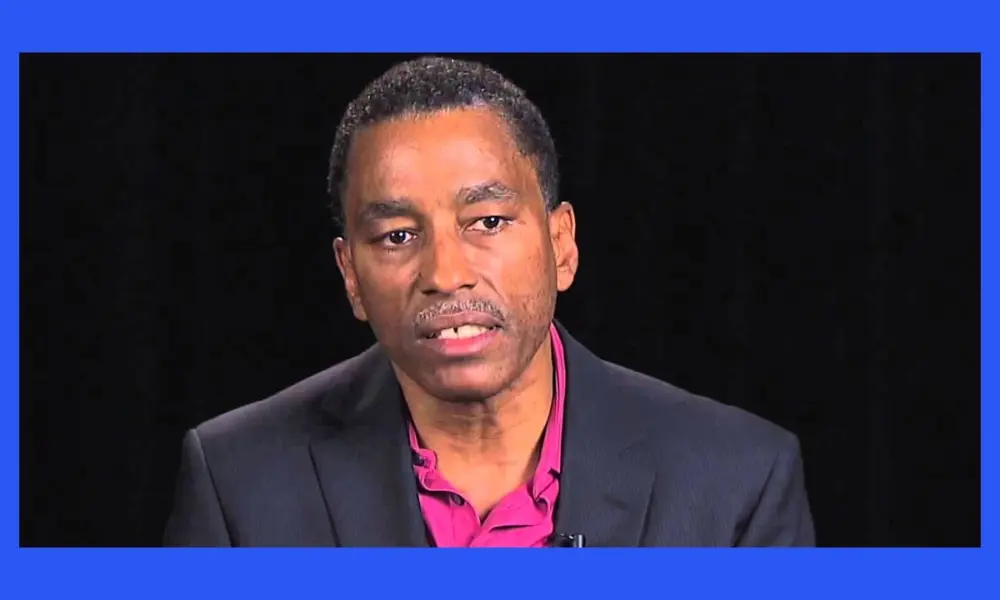
Roderick Jeffrey Watts is an American psychologist, professor, and social justice advocate known for his research in clinical-community psychology and African American empowerment. He is the husband of Isabel Wilkerson, the first African American woman to win the Pulitzer Prize in journalism. Watts has taught at several major universities and dedicated his career to linking psychology with social change.
Table Of Content
- Early Life and Family Background
- Education and Academic Journey
- Physical Appearance and Personality
- Parents
- Father
- Mother
- Siblings and Extended Family
- Career and Professional Life
- Personal Life and Privacy
- Media Presence and Public Perception
- Net Worth and Lifestyle
- Future Prospects and Legacy
- Legacy and Influence of Family
- Conclusion
- Frequently Asked Questions
- 1. Who is Roderick Jeffrey Watts?
- 2. What is Roderick Jeffrey Watts famous for?
- 3. Who is Isabel Wilkerson?
- 4. Where did Roderick Jeffrey Watts teach?
- 5. What did Roderick Jeffrey Watts study and research?
- 6. When did Roderick Jeffrey Watts pass away?
- 7. Where did Roderick Jeffrey Watts and Isabel Wilkerson get married?
- 8. What is Roderick Jeffrey Watts’ connection to the film Origin?
Not every remarkable life comes with a spotlight. Some people build their legacy quietly, through years of teaching, research, and service. Roderick Jeffrey Watts is one of those people. He is a respected psychologist, a dedicated professor, and a passionate advocate for social justice. While the broader public may know him primarily as the husband of Pulitzer Prize-winning author Isabel Wilkerson, Roderick’s own story is rich, meaningful, and worth telling in full.
He has spent his career studying how race, identity, and social systems affect the mental health of individuals and communities. His work has touched thousands of students, shaped academic thinking, and helped marginalized young people find their voice. His life is a story of quiet strength, intellectual purpose, and deep commitment to a more equal world.
| Attribute | Details |
|---|---|
| Full Name | Roderick Jeffrey Watts |
| Age | Believed to have been in his early sixties at the time of his passing in 2015 |
| Place of Birth | United States |
| Nationality | American |
| Profession | Psychologist, Professor, Social Justice Advocate |
| Famous For | Academic work in community psychology; husband of Isabel Wilkerson |
| Father | Health planner, New York State Department of Health |
| Mother | Office manager, Black Dimensions organization |
| Siblings | Not publicly disclosed |
| Marital Status | Married to Isabel Wilkerson |
| Known Traits | Calm, thoughtful, compassionate, deeply principled |
| Social Media Presence | None publicly known |
Early Life and Family Background
Roderick Jeffrey Watts grew up in New York in an African American family that placed great value on education, community, and social awareness. From a young age, the conversations in his home went beyond everyday topics. His family talked about justice, inequality, and what it means to serve others. These discussions were not unusual or dramatic — they were simply part of the fabric of how his family lived and thought.
His upbringing gave him an early and clear understanding that the world was not always fair, and that understanding this reality was not enough. Something had to be done about it. That belief stayed with him throughout his entire life and became the foundation of his professional identity.
Education and Academic Journey
Roderick Jeffrey Watts pursued higher education with a clear sense of purpose. He earned his Ph.D. in Clinical-Community Psychology from the University of Maryland. This specialized field sits at the intersection of mental health and community well-being. It is not simply about treating individuals in a clinical setting. It is about understanding how neighborhoods, societies, and social systems shape the way people think, feel, and live.
His academic training gave him the tools to approach some of the most difficult questions in American life, including questions about race, power, and who gets access to opportunity. He studied how young people, especially African American men and boys, develop a sense of identity within a society that often undervalues them. His research in this area helped him develop frameworks for empowerment that would go on to influence classrooms, community programs, and policy discussions.
Throughout his career, Watts taught at some of the most respected institutions in the country. He held positions at Yale University’s School of Medicine, DePaul University, Georgia State University, and the City University of New York Graduate Center. He also lectured at Stellenbosch University in South Africa, extending his reach and influence beyond American borders.
Physical Appearance and Personality
Those who knew Roderick Jeffrey Watts personally described him as a man of calm and gentle presence. He carried himself with quiet confidence and dignity. He was not someone who sought the spotlight or craved attention. Instead, he led through the quality of his thinking, the depth of his care for others, and his consistent presence as a teacher and mentor.
His personality reflected the values he spent his career studying. He believed in fairness, in listening, and in the power of human connection. Students who learned from him often spoke of his ability to make complex ideas feel accessible and urgent. He was the kind of professor who did not just teach a subject — he invited people into a way of seeing the world.
Parents
Father
Roderick’s father worked as a health planner for the New York State Department of Health. His work was rooted in public service and in making sure that health systems reached people who needed them most. This role gave Roderick an early model of what it looks like to use professional knowledge in service of the community. His father’s career showed him that expertise can be directed outward, toward improving the lives of others, rather than simply building personal success.
Mother
Roderick’s mother served as an office manager for Black Dimensions, an organization dedicated to addressing the social and economic challenges faced by African American communities. Her daily work was tied to issues of racial equity and community support. Through her example, Roderick learned that community organizations play a vital role in supporting people who are overlooked by larger systems. She helped him understand the importance of grassroots engagement and cultural pride long before he could put those ideas into academic language.
Siblings and Extended Family
Details about Roderick Jeffrey Watts’ siblings and extended family have not been shared publicly. He was known throughout his life for maintaining a private personal life, separate from his professional reputation. What is clear is that the family environment he grew up in was one that nurtured a deep sense of social responsibility. Whether through siblings or extended relatives, the values of service and justice were woven into his family identity.
Career and Professional Life
Roderick Jeffrey Watts built a career that bridged the gap between academic psychology and real-world social change. His research focused on several areas, including social identity, oppression, African American male development, and community empowerment. He worked extensively with programs aimed at helping young people, particularly adolescent African American men, develop a sense of purpose and agency in a society that often placed barriers in their path.
He co-edited the book Human Diversity: Perspectives, which became an important resource in broadening academic understanding of cultural and social factors in psychology. This work helped shift conversations in the field toward more inclusive and community-centered approaches.
Beyond the university setting, Watts engaged directly with community programs. He believed that psychology was most powerful when it left the classroom and entered the streets, the schools, and the gathering places where people actually lived. He developed frameworks around what he called “sociopolitical development,” which described the process by which young people come to understand and respond to social inequality. This concept became influential in both academic research and youth development work.
His teaching style was known for being accessible and deeply human. He did not lecture from a distance. He engaged his students as partners in understanding the world. He asked them to think critically about their own experiences and to connect personal stories with larger social patterns.
Personal Life and Privacy
Roderick Jeffrey Watts and Isabel Wilkerson were united in marriage in a ceremony held at Oxon Hill Manor in Fort Washington, Maryland. The venue, known for its elegance and historical significance, reflected the thoughtfulness that characterized both of their lives. Their marriage brought together two people who shared a deep intellectual and moral commitment to understanding and confronting racial inequality in America.
Together, they built a life centered around shared values. Both were passionate about literature, research, and advocacy. Wilkerson has spoken warmly about the support Roderick provided during the many years she spent researching and writing her celebrated books. Their partnership was one of mutual respect and genuine understanding.
Roderick passed away in 2015. His death was a profound loss for those who knew him personally and for the wider community of scholars and advocates who had been shaped by his work. His wife Isabel Wilkerson has honored his memory publicly, and the 2023 biographical film Origin, which chronicles Wilkerson’s experience writing her book Caste: The Origins of Our Discontents, reflects the personal grief and love that shaped that period of her life.
Outside of his work, Roderick enjoyed reading and listening to music. He viewed these not as idle hobbies but as essential practices for maintaining emotional balance and personal growth. They were extensions of the same thoughtful, curious nature that defined his professional life.
Media Presence and Public Perception
Roderick Jeffrey Watts was not a public figure in the conventional sense. He did not seek media attention, and very little of his personal life was shared outside of academic and advocacy circles. His name came to wider public attention largely because of his marriage to Isabel Wilkerson, whose books and journalism brought her into national and international conversations about race and history.
Among those in his professional field, however, his reputation was well established. Colleagues and students knew him as a serious thinker, a generous mentor, and a man of genuine moral character. He was seen as someone who practiced what he preached, bringing the principles of empathy and social justice into every aspect of how he lived and worked.
His legacy in the academic world continues to grow as researchers and educators build on the frameworks he developed. His ideas about sociopolitical development and community psychology have found new audiences in a world that increasingly recognizes the connection between mental health and systemic inequality.
Net Worth and Lifestyle
Roderick Jeffrey Watts was not a public figure whose financial life was tracked or reported on. His net worth remains unknown and was never a matter of public record. What is clear is that he lived modestly, in keeping with the values he held. His lifestyle reflected his priorities: intellectual work, community engagement, family, and personal reflection. He did not appear to place great importance on material wealth or public recognition.
His career in academia, community psychology, and advocacy was one driven by purpose rather than profit. The richness of his life was measured in the ideas he contributed, the students he mentored, and the relationships he built.
Future Prospects and Legacy
Though Roderick Jeffrey Watts passed away in 2015, his influence continues to live on through the work of his students, colleagues, and the broader field of community psychology. The frameworks he developed for understanding sociopolitical development among African American youth have been adopted and extended by researchers and practitioners across the country.
His ideas are as relevant today as they were during his most active years. In a world still grappling with issues of racial inequality, systemic injustice, and the mental health of marginalized communities, the questions Watts devoted his life to remain urgent and unresolved. His work provides both a foundation and a challenge — an invitation to future generations to continue the work he began.
Legacy and Influence of Family
The partnership between Roderick Jeffrey Watts and Isabel Wilkerson represents one of the most quietly powerful unions in American intellectual life. While Wilkerson carried her work into the public sphere through her writing and journalism, Watts supported that mission from a place of deep personal conviction and scholarly rigor. His own research and the values he carried from his family in New York helped shape the household of ideas that made Wilkerson’s work possible.
His mother’s work with Black Dimensions and his father’s commitment to public health gave Roderick a model of engaged, purposeful citizenship that he passed forward through his own life and career. That legacy, rooted in family and community, runs like a thread through everything he accomplished.
Conclusion
Roderick Jeffrey Watts was a man who chose depth over fame and service over recognition. He was a scholar, a teacher, and a partner who gave his life to the pursuit of justice and human dignity. While he is often introduced as the husband of Isabel Wilkerson, his own story is one of remarkable purpose and lasting contribution. He showed that the quiet, consistent work of a teacher and researcher can change lives and shift the direction of entire fields of thought.
His life reminds us that influence does not always come from the loudest voice in the room. Sometimes it comes from the steady, thoughtful presence of someone who shows up day after day, asks the right questions, and believes deeply in the possibility of a fairer world. Roderick Jeffrey Watts was that kind of person. His memory endures in the work of everyone he touched.
Frequently Asked Questions
1. Who is Roderick Jeffrey Watts?
Roderick Jeffrey Watts was an American psychologist, professor, and social justice advocate. He earned his Ph.D. in Clinical-Community Psychology and spent his career researching identity, empowerment, and the mental health of African American communities. He is also known as the husband of Pulitzer Prize-winning author Isabel Wilkerson.
2. What is Roderick Jeffrey Watts famous for?
He is primarily known in academic circles for his pioneering research in sociopolitical development and community psychology. More broadly, he became known to general audiences as the husband and life partner of Isabel Wilkerson, one of America’s most celebrated nonfiction writers.
3. Who is Isabel Wilkerson?
Isabel Wilkerson is a Pulitzer Prize-winning American journalist and author. She was the first African American woman to win the Pulitzer Prize in journalism, which she received in 1994 while serving as Chicago Bureau Chief of The New York Times. She is the author of the bestselling books The Warmth of Other Suns and Caste: The Origins of Our Discontents.
4. Where did Roderick Jeffrey Watts teach?
He held teaching positions at several prestigious institutions, including Yale University’s School of Medicine, DePaul University, Georgia State University, the City University of New York Graduate Center, and Stellenbosch University in South Africa.
5. What did Roderick Jeffrey Watts study and research?
His research focused on social identity, oppression, African American male development, and community empowerment. He is particularly known for developing frameworks around sociopolitical development, which describe how young people come to understand and respond to social inequality.
6. When did Roderick Jeffrey Watts pass away?
Roderick Jeffrey Watts passed away in 2015. He was believed to be in his early sixties at the time of his death. His passing was a significant loss for his family, his students, and the wider academic and social justice communities he had served for decades.
7. Where did Roderick Jeffrey Watts and Isabel Wilkerson get married?
The couple was married in a ceremony held at Oxon Hill Manor in Fort Washington, Maryland, a venue known for its elegance and historical character.
8. What is Roderick Jeffrey Watts’ connection to the film Origin?
The 2023 biographical drama Origin, directed by Ava DuVernay and starring Aunjanue Ellis as Isabel Wilkerson, chronicles a period in Wilkerson’s life that includes her personal loss following Roderick’s death. The film reflects the deep impact his passing had on her and on the writing of her book Caste.






No Comment! Be the first one.